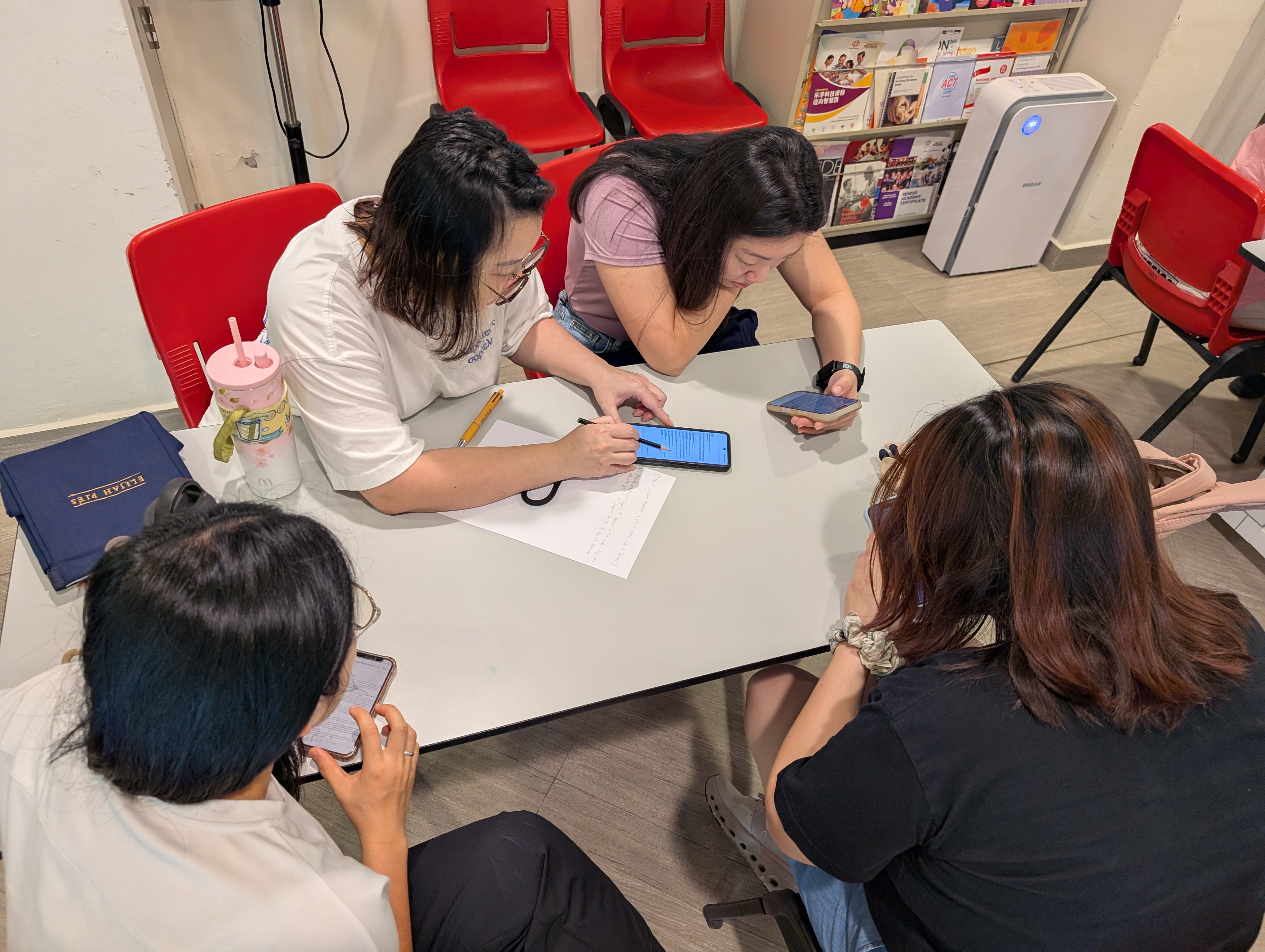
Befriending sounds simple. A volunteer visits a senior, sits down, and keeps them company. But anyone who has done it knows there is more going on. What do you say when the conversation goes quiet? How do you know when something at home is not right? What if the senior needs help getting around?
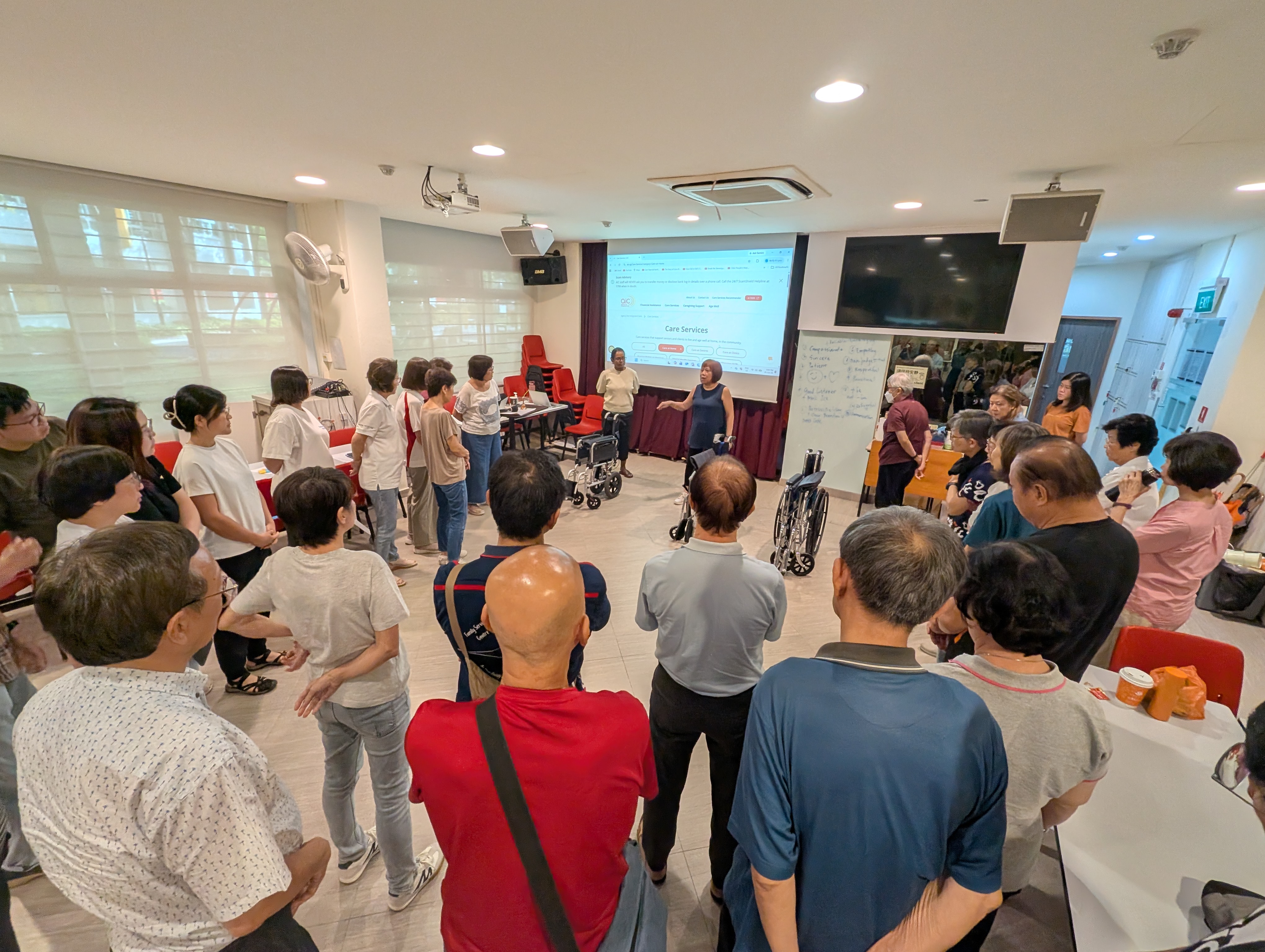
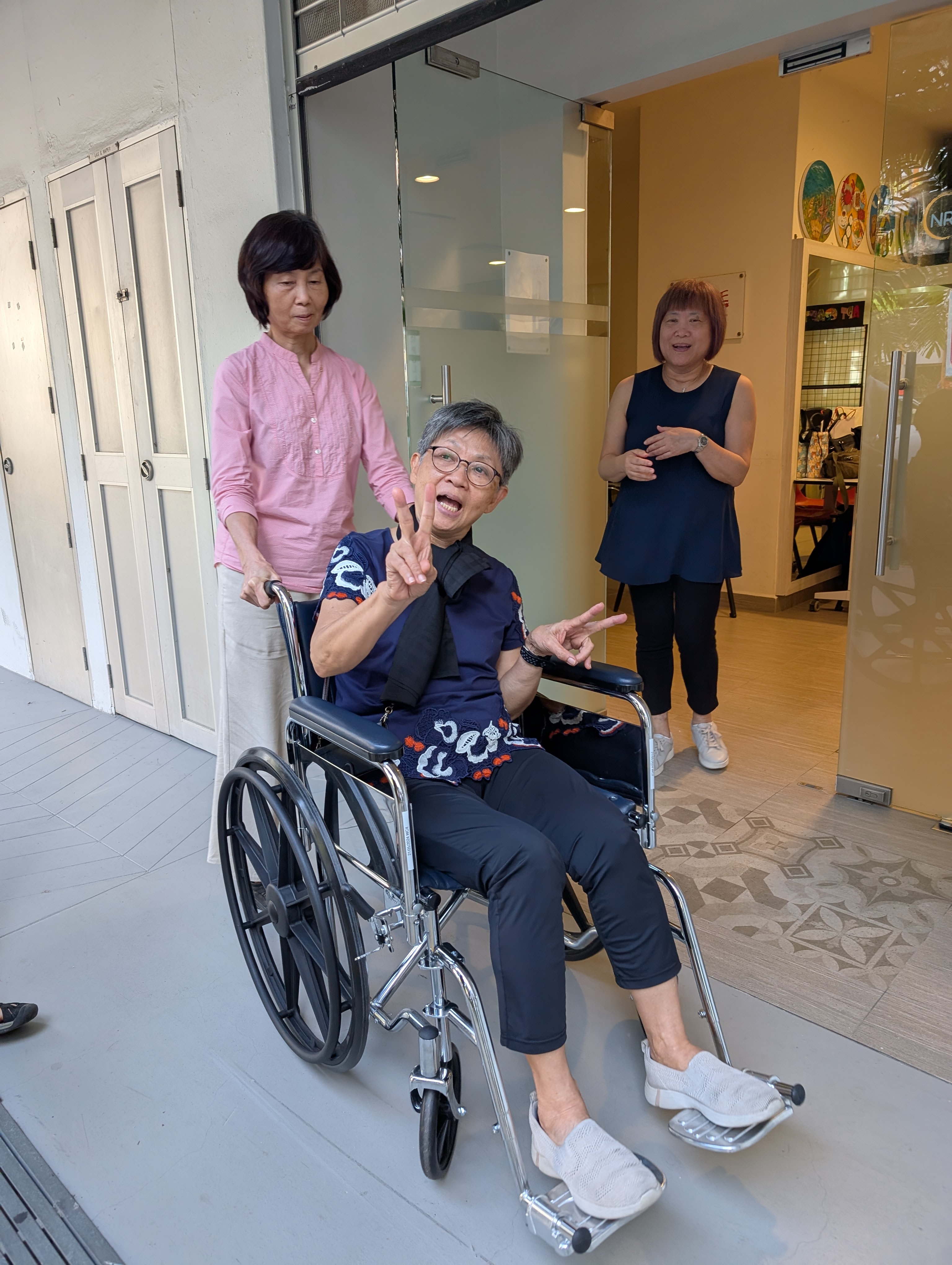
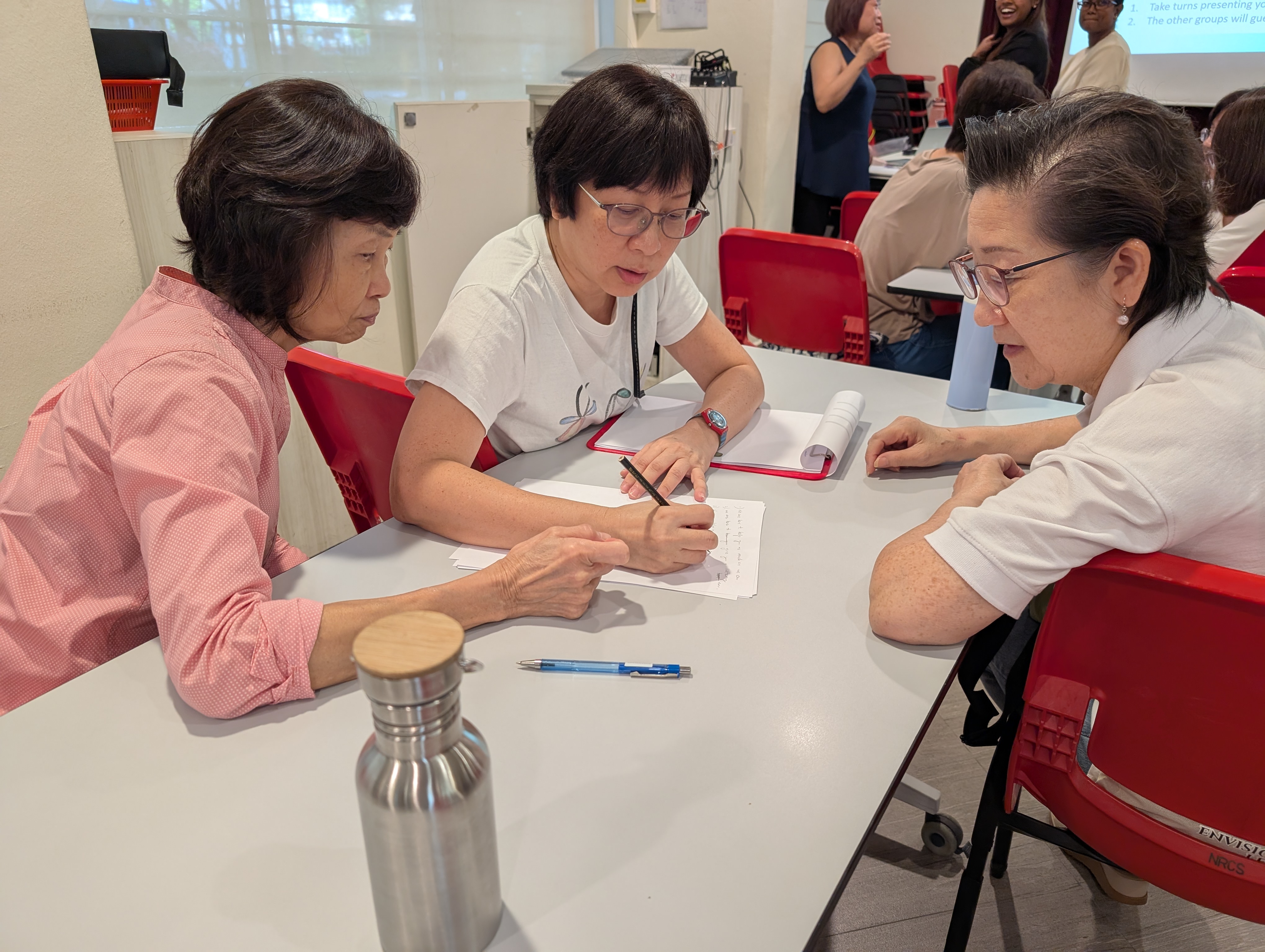
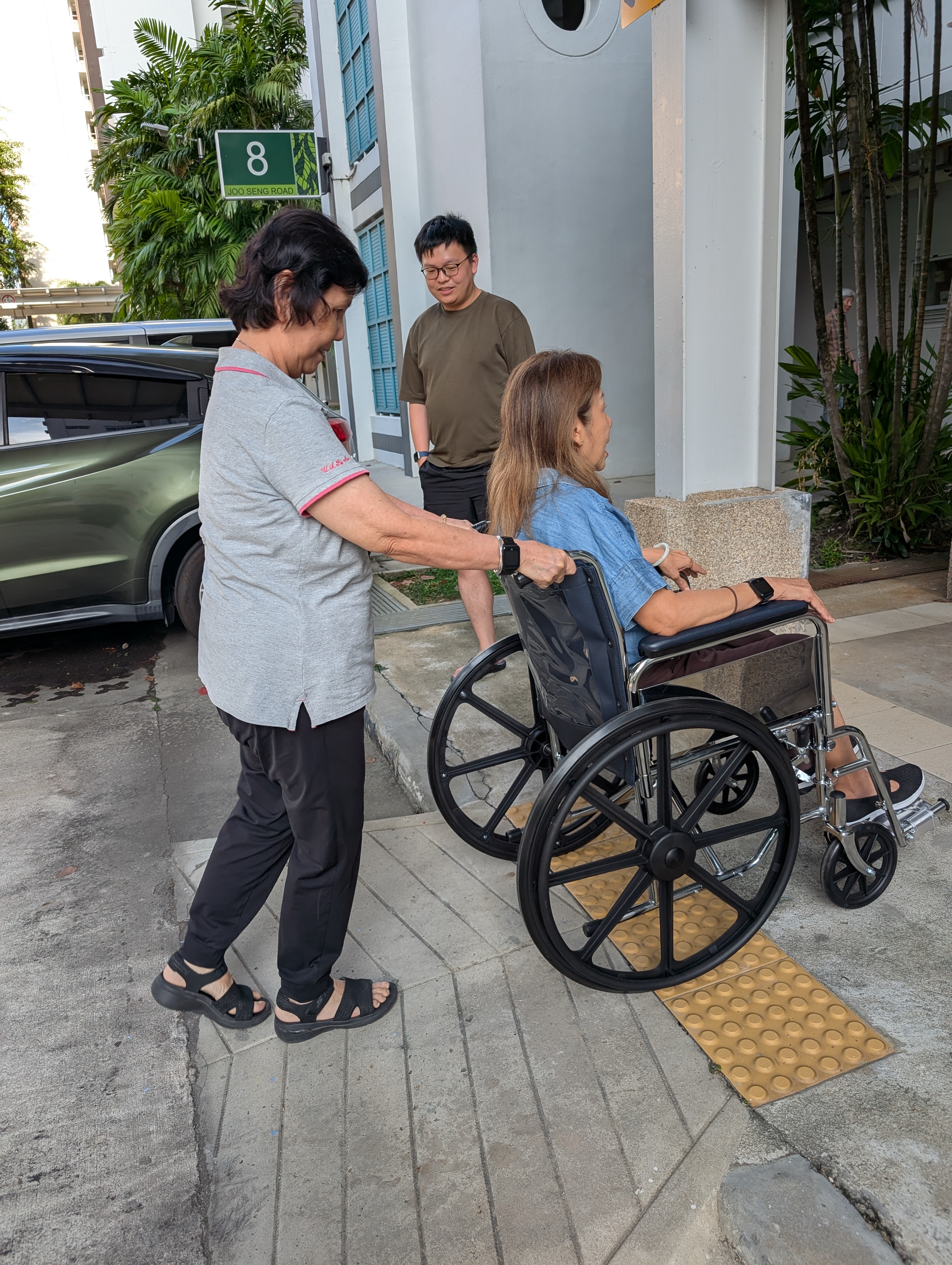
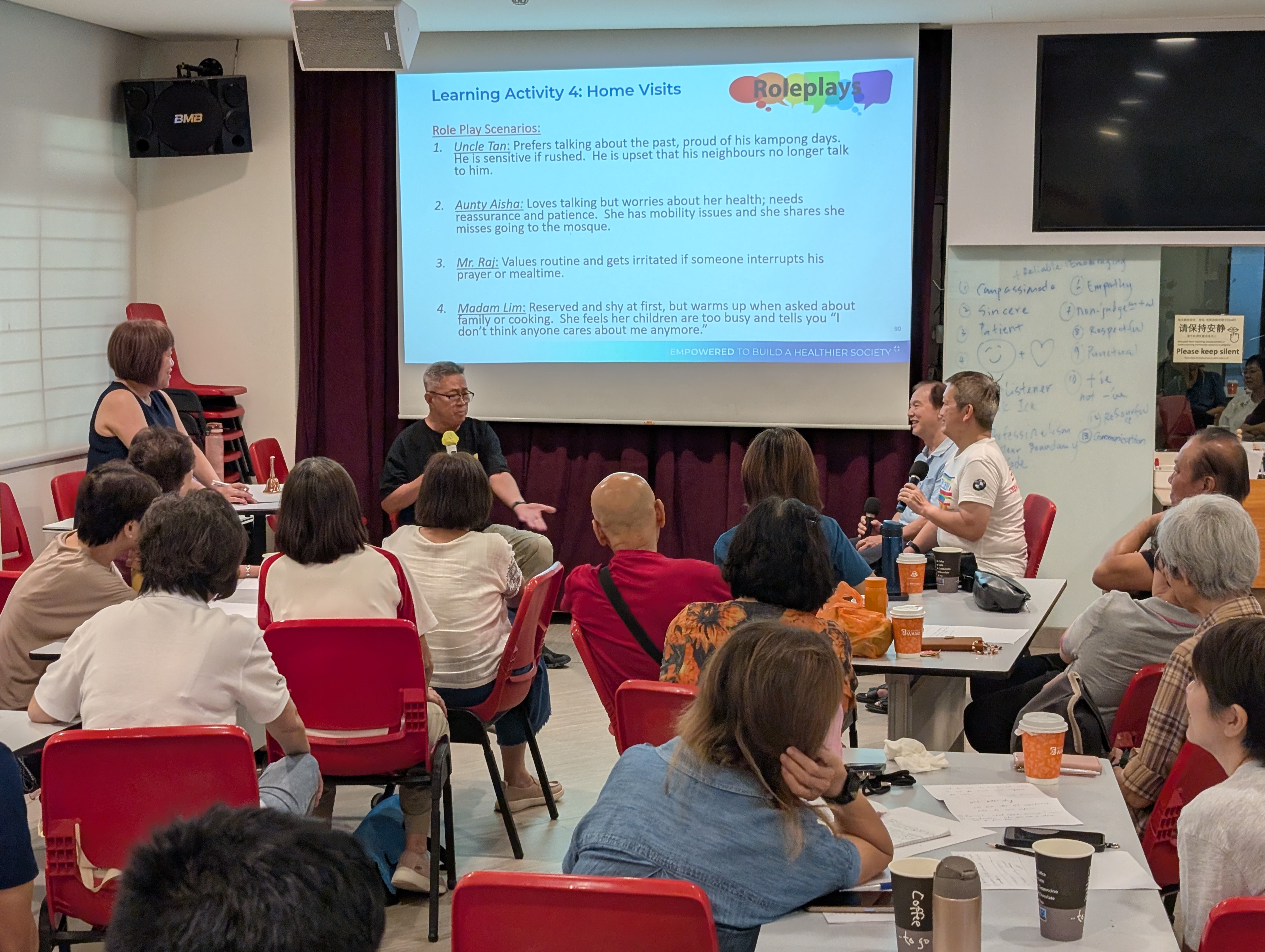
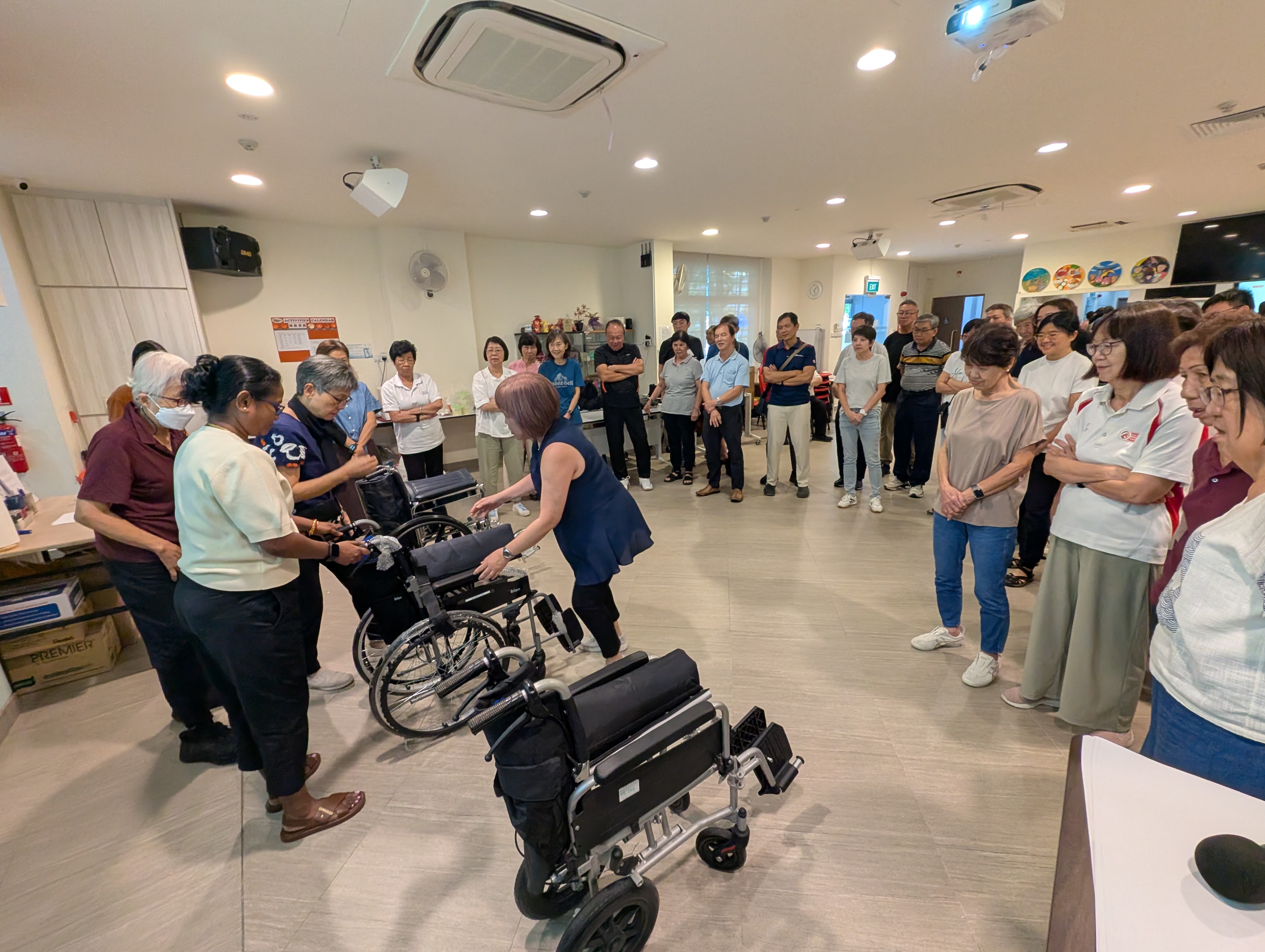
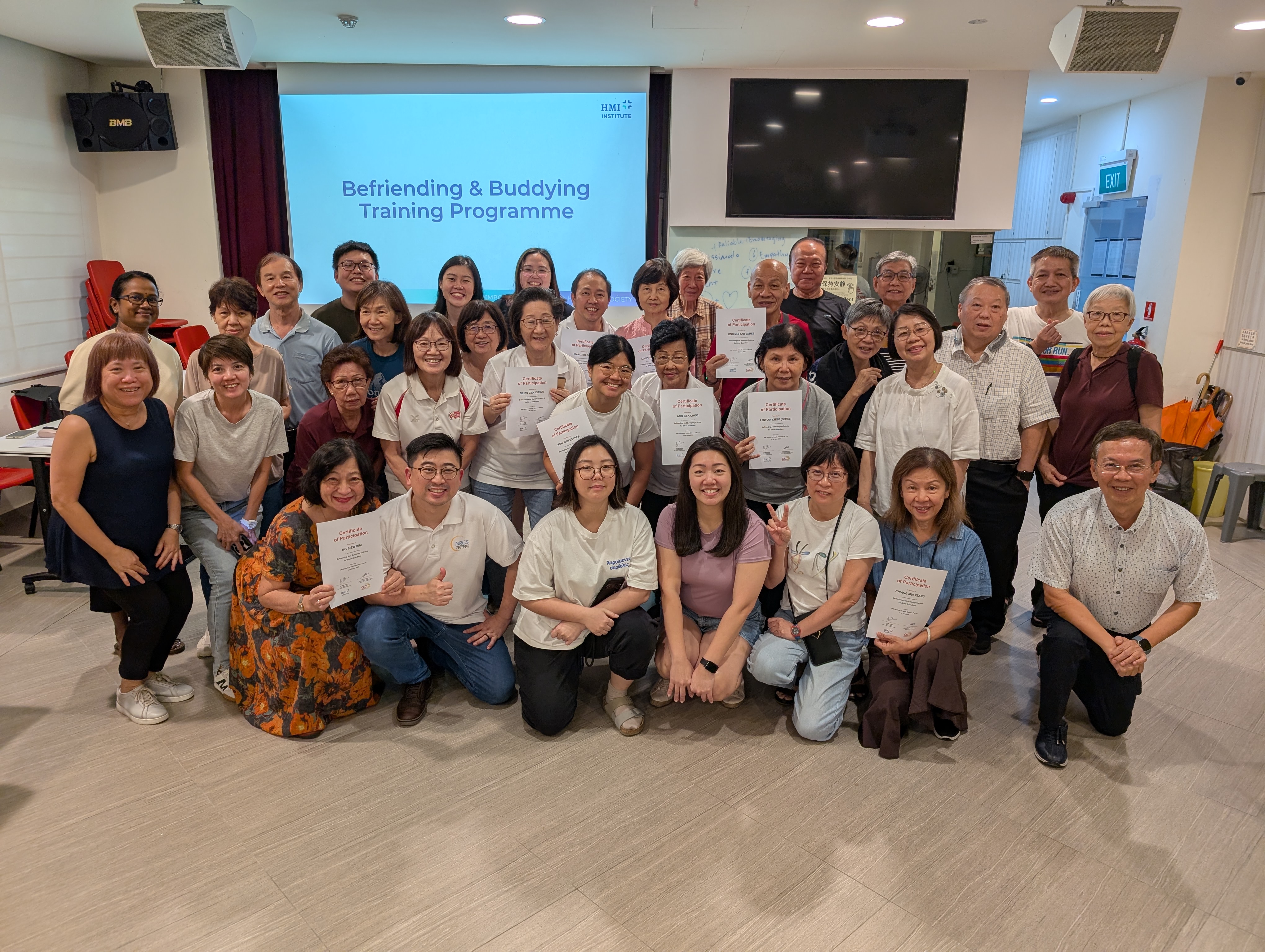
On 20 June, more than 20 of our volunteers came together for a befriender training led by a trainer from the Agency for Integrated Care (AIC), in collaboration with Sheng Hong, our partner active ageing centre. The session covered how to engage befriendees well, how to notice safety and welfare concerns early, and practical skills such as handling a wheelchair safely.
What stood out was who was in the room. Many of the participants are seasoned volunteers who have been visiting seniors for years, but whose experience had never been formalised. The training gave them a shared language for what they were already doing well.
It also became a place to learn from one another. Volunteers shared their own befriending experiences openly, and the newer ones gained the most. Hearing from people who had been through it gave them the confidence to be more helpful in the lives of the seniors they visit.
That confidence matters. A senior's experience of a visit depends a great deal on how at ease the volunteer is. A volunteer who feels equipped listens better, notices more, and keeps coming back.
Training is part of our commitment to the people who give their time. They give their best to the seniors we serve, so we want to give them what they need to do it well.
For the Treasure Box article, which date should it carry? If you give me the session dates, I'll add a date line to its handoff too.